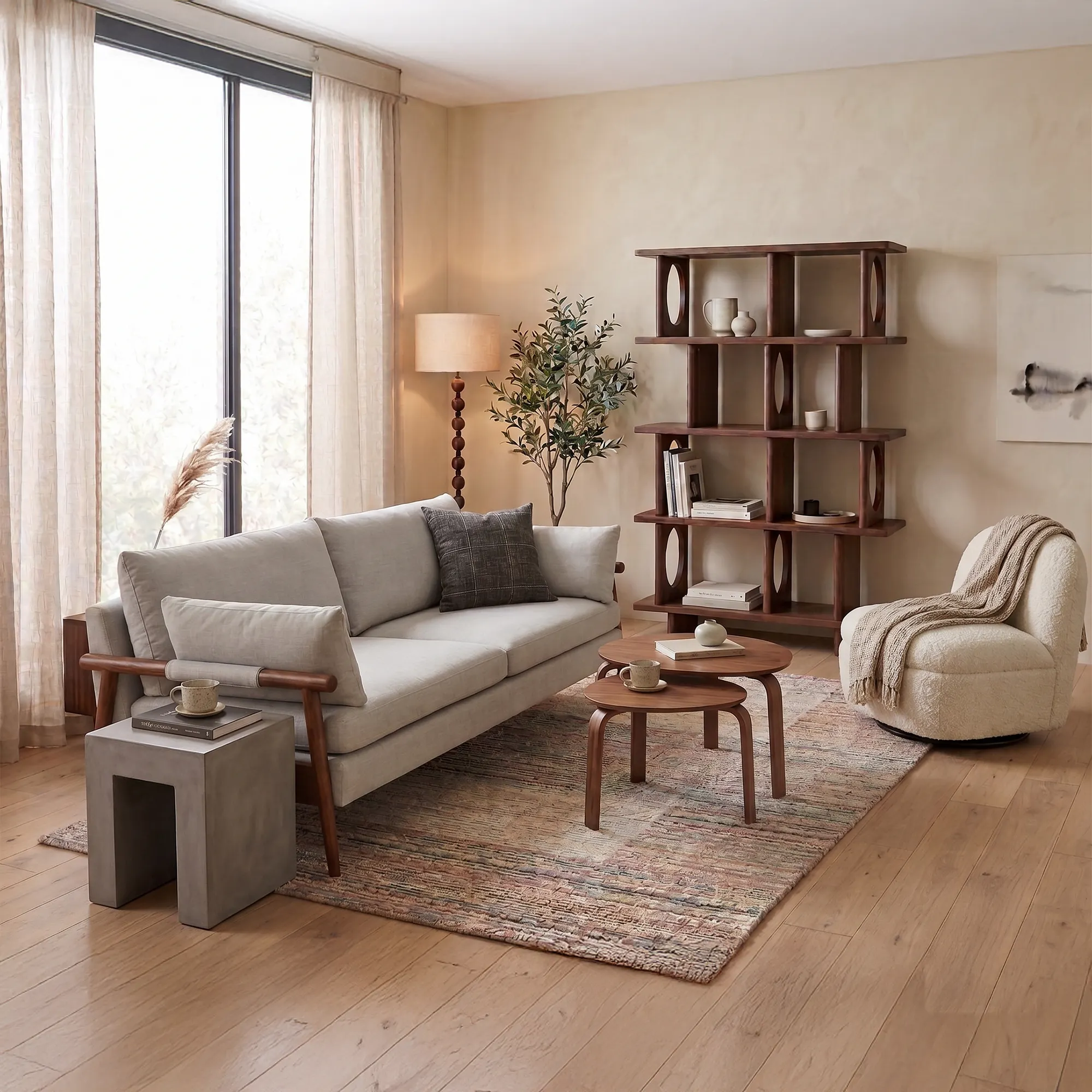
How to Design a Small Living Room in Singapore: 10 Space-Maximising Ideas
Making the most of limited living space is one of the most common challenges in newer Singapore homes, especially in BTOs and modern condos. But with the right combination of furniture and layout, you can fit everything you need into a small living room without making it feel cramped.
Whether you're setting out to furnish a small room from scratch or rework one you already have, these 10 practical ideas cover the furniture, layout and styling that matter most in HDB, BTO and condo homes.
10 Furnishing Ideas for Small Living Rooms
The 10 ideas below fall into three broad themes. Together, they cover the main levers you have for making a small living room work harder.
Choose multifunctional and modular furniture:
- Start with a modular sofa
- Choose a multifunctional coffee table
- Use nesting tables instead of side tables
- Add a storage ottoman or two
Maximise storage with smart furniture solutions:
- Go vertical with storage
- Use wall-mounted and floating pieces
Use visual tricks to make the room feel bigger:
- Choose furniture with visible legs
- Add mirrors strategically
- Stick to a tight, light palette
- Plan around one focal point
Each idea below stands on its own, so pick the ones that suit your room.
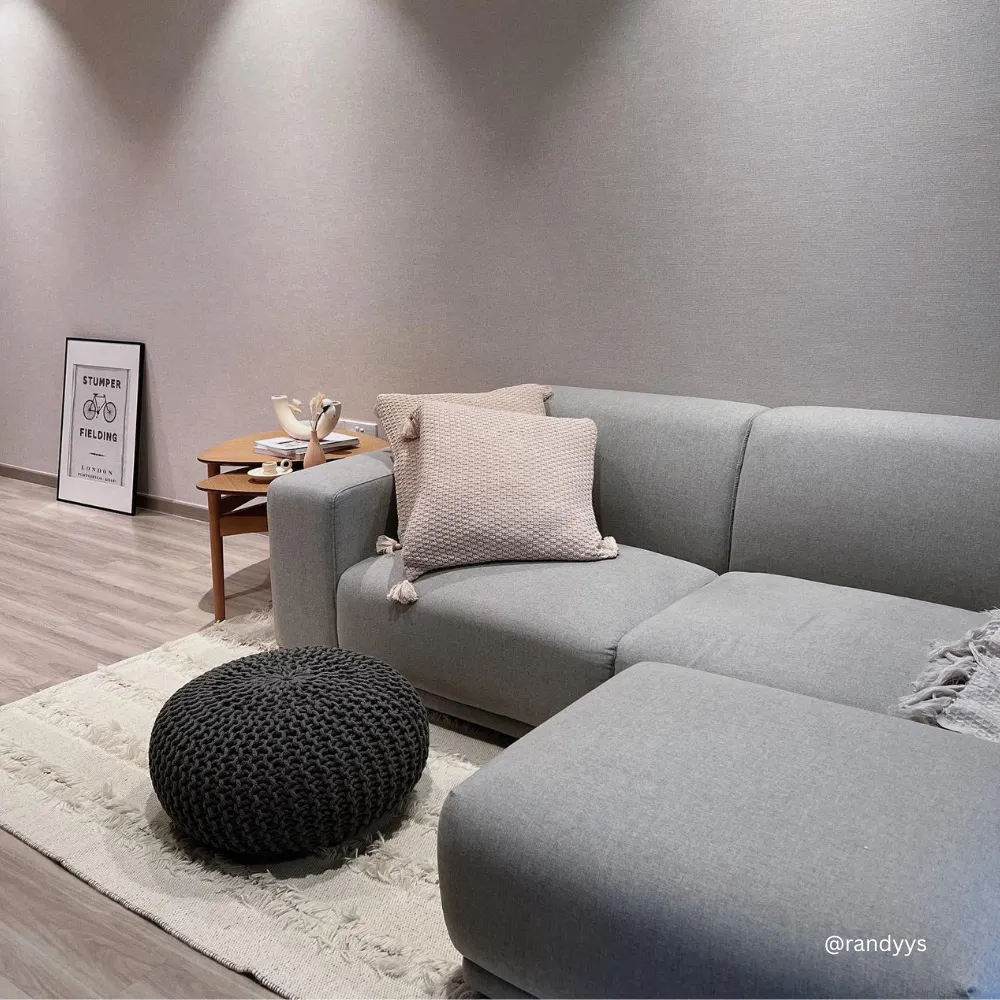
1. Start with a Modular Sofa
A modular sofa is the single highest-impact piece for a small living room because you can reconfigure it as your needs change. The sections travel through tight HDB lifts and corridors easily, and you can rearrange the pieces from an L-shape into a straight three-seater when you move house, ensuring the sofa moves with you rather than needing to be replaced.
Works best for: 3-room BTOs and studios (start with an armless seat and a corner piece), and 4-room HDBs that want the option to expand into a full L-shape later without committing on day one.
Need some guidance on choosing your first sofa? Read our Sofa buying guide to find out which sofa size suits your living room.
2. Choose a Multifunctional Coffee Table
A coffee table that opens up for storage or doubles as a work surface is a single piece serving multiple purposes, with no extra floor space required. Two formats are worth knowing:
- Lift-Up Storage Coffee Tables: The top hinges up to reveal hidden storage and creates an instant standing-height work or dining surface.
- Reversible-Top Coffee Tables: Two functional sides in one piece, giving you the flexibility of a different look or use depending on the moment.
Think of it as the living-room equivalent of an extendable dining table: one piece, two jobs, half the floor space.
Works best for: Homes without a dedicated dining or study area where the living room needs to double up. Meals, work and homework all happen in the same space, and the coffee table often has to stand in as a work surface, a laptop table or a hidden storage spot.
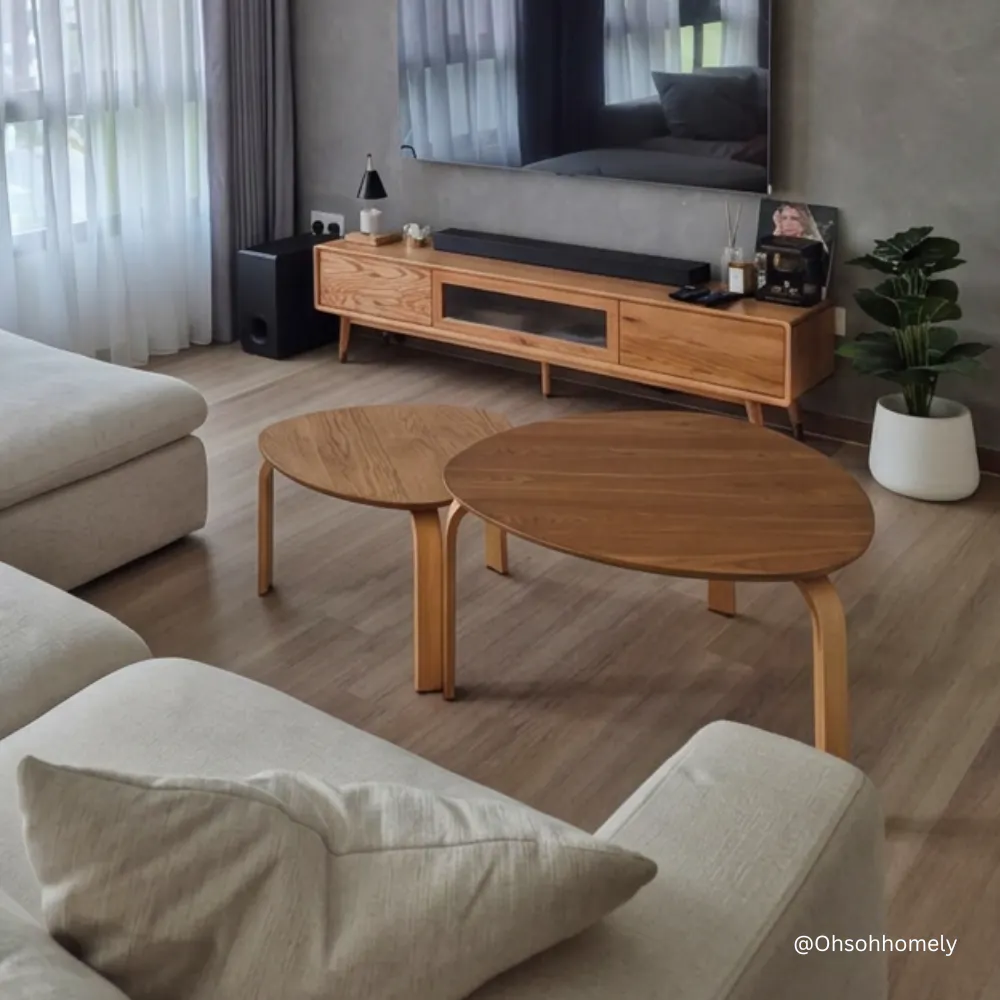
3. Use Nesting Tables Instead of Side Tables
Nesting tables give you two or three surfaces in the floor space of a single side table. They stack neatly together when not in use, then pull apart when guests arrive, or someone needs a spot for a laptop.
Works best for: Homes where every square foot counts and side tables are a luxury you can't quite justify. A set of two or three in light wood or metal, placed beside the sofa, is one of the highest-leverage moves you can make in a compact room.
4. Add a Storage Ottoman or Two
A storage ottoman is the most flexible single piece you can add to a small living room, serving as seating, a footrest, a side surface and hidden storage all at once. Small round storage ottomans tuck under a console when not in use, giving you the flexibility of extra seating without dedicating space to a second armchair.
Alternatively, consider an entryway bench with hidden storage. It does the same job while marking the transition into the room and holding shoes, bags or throws inside.
Works best for: 4-room HDBs and BTOs with family living to balance, and condos that host often but don't have room for a second armchair.
5. Go Vertical with Storage
When floor space runs out, the only direction left is up, and vertical storage is one of the most underused wins in Singapore small living rooms.
A few tactical ideas:
- Choose tall, slim bookshelves rather than wide low ones.
- Extend storage close to the ceiling, where the top half can hold things you don't need often.
- Add floating shelves above sofas and console tables for decor and books, which reclaims wall space without taking any floor.
Works best for: 3-room HDBs, studio BTOs and compact 4-room layouts, where reclaiming wall height adds storage without taking a centimetre of floor. As a bonus, vertical lines draw the eye upwards and make ceilings feel taller.
6. Use Wall-Mounted and Floating Pieces
Wall-mounted TV consoles, floating shelves and wall-hung side tables free up floor space and instantly make a small living room feel airier. Every centimetre of visible floor reads as room, so reclaiming floor space from heavy floor-standing furniture is one of the biggest visual wins you can make.
Floating wall shelves over the sofa (instead of a bulky bookcase) keep the wall feeling light while still giving you space for books and display pieces, and free up the floor entirely for other uses.
Works best for: 3-room HDBs and studio BTOs, and any living room where the TV wall is the main focal point.
7. Choose Furniture with Visible Legs
Sofas, sideboards, coffee tables and TV consoles with visible legs make a small living room feel noticeably bigger. The visible floor space underneath creates the illusion of more room. So choose pieces with slim, tapered or hairpin legs over chunky, full-bodied bases. Japandi and mid-century modern silhouettes are naturally strong here, since both styles favour lifted, leggy pieces over heavier profiles.
Works best for: Any small living room, particularly one where a large full-bodied piece of furniture would take up visible floor space and shrink the sense of room by contrast.
8. Add Mirrors Strategically
A large mirror placed opposite a window roughly doubles the natural light in a small living room and effectively doubles the visual depth of the space. Position it opposite your main light source for maximum effect, or behind a sofa or sideboard for a softer, layered look. One large statement mirror works better than a cluster of small ones, since visual clutter reverses the depth-doubling effect.
Works best for: Narrower homes where a mirror on the long wall opens the room out, including newer condos and ECs, or any HDB living room short on natural light.
9. Stick to a Tight, Light Palette
Keeping your living room to a small palette of light, warm neutrals makes the whole space feel open and visually unified. Pick a base (white, warm grey, soft beige) and one or two accent tones (sage, clay, deep teal), then stick to them across the sofa, walls, rugs and decor. High contrast and competing colours visually break a small room into smaller zones, while a unified palette lets the eye flow from one end of the room to the other.
Works best for: All home types, but especially newer compact condos and ECs with narrow proportions, where too many competing colours would make the space feel smaller.
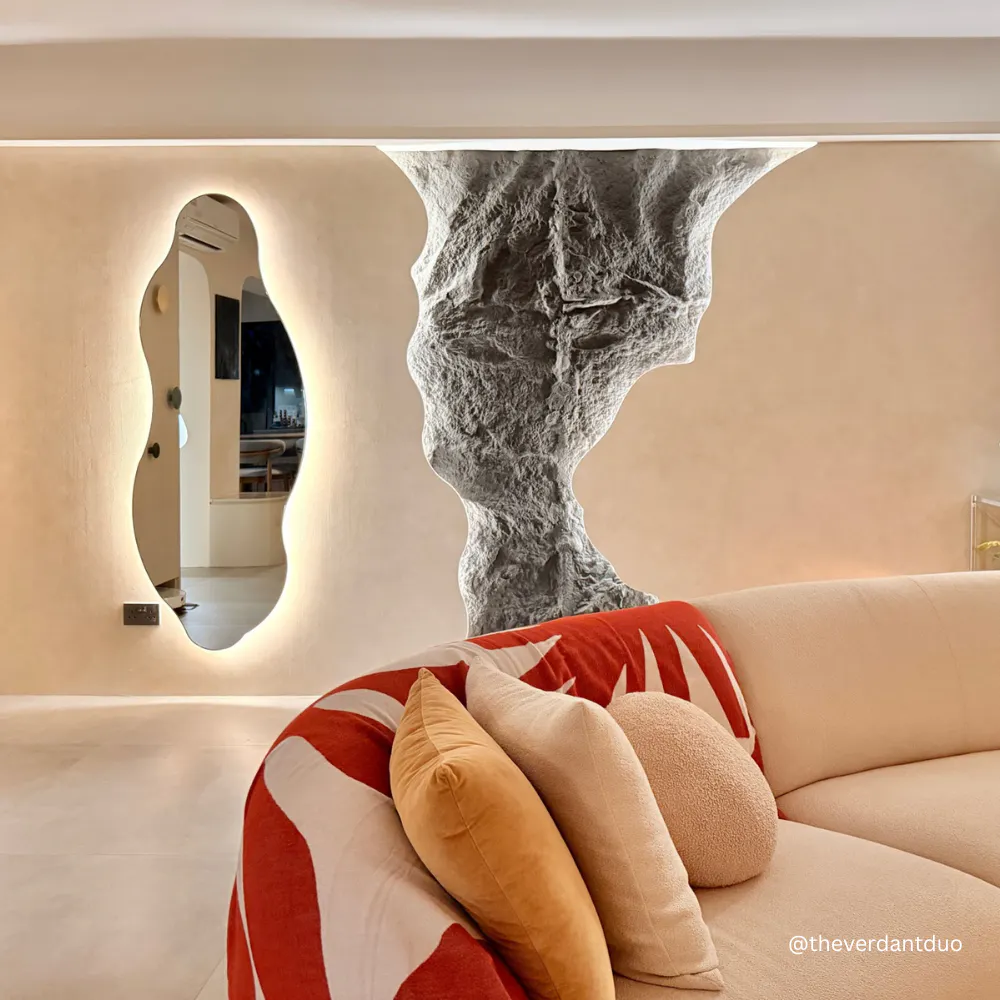
10. Plan Around One Focal Point
Every small living room benefits from one clear focal point (the TV wall, a feature sofa, a piece of art), with the rest of the room arranged to support it rather than compete with it. Multiple focal points in a small room create visual chaos and make the space feel smaller, not richer. The practical move is to decide your focal point before buying furniture, then choose pieces that frame and serve it.
Works best for: All home types. This is one design principle that applies universally and provides the foundation for the other ideas in this guide.