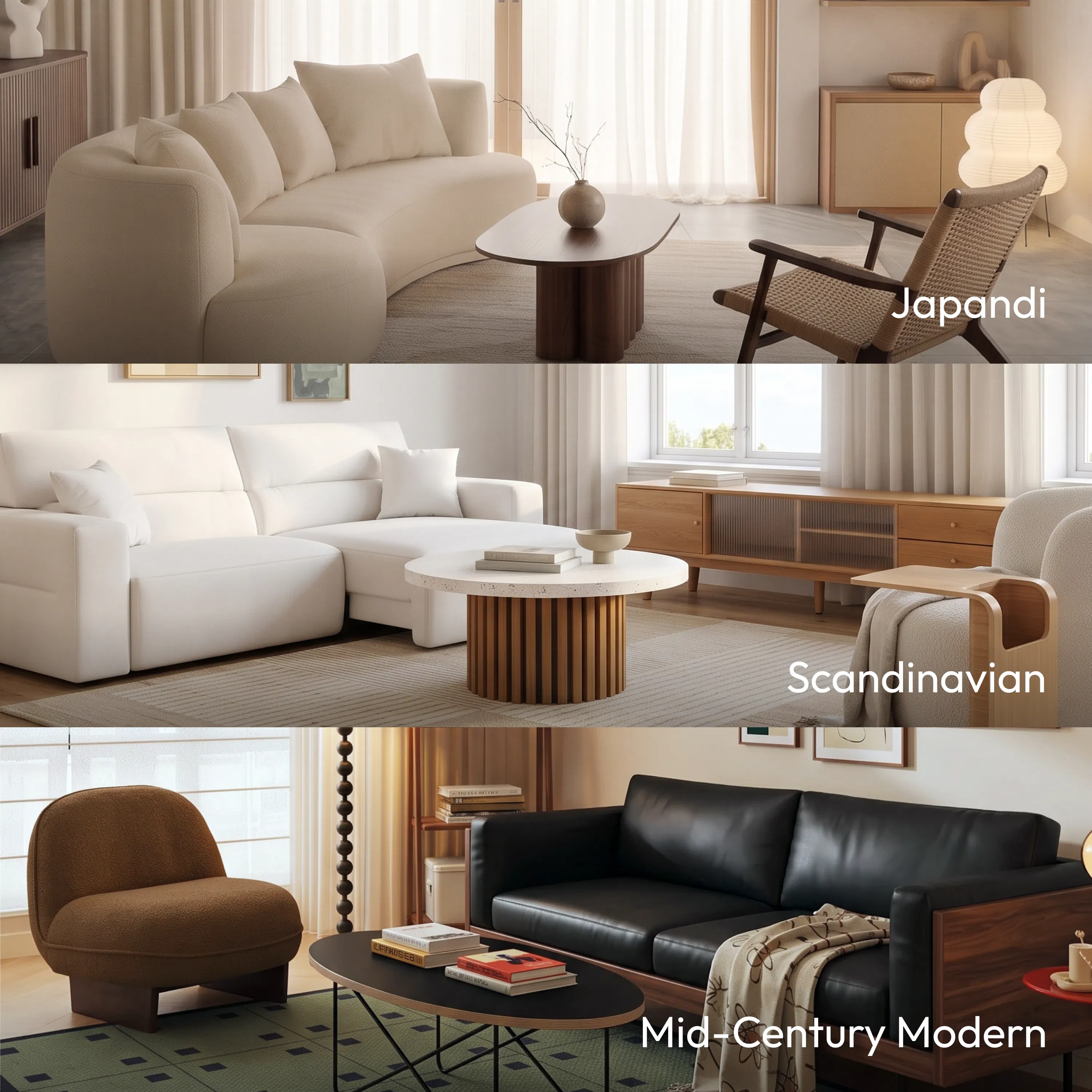
Japandi vs Scandinavian vs Mid-Century Modern Design: How to Make Each Style Work in Your Home
The three styles overlap more than most people realise. Japandi, Scandinavian and Mid-Century Modern all favour clean lines, natural materials and a sense of calm, which is why they often get confused for each other in Pinterest boards, renovation inspiration and interior design guides. But they work best for different personalities, lifestyles and ways of living, so picking the right one saves you from buying furniture that works against the mood you're trying to create you're actually trying to create. In short:
- Japandi is calm, warm and restrained.
- Scandinavian is bright, cosy and lived-in.
- Mid-Century Modern is character, warmth and a touch of retro confidence.
Our guide will walk you through the characteristics of each, a side-by-side comparison table, and a fit guide based on how you want your home to feel. If you'd rather cut to the chase, please skip to the comparison table and the "which style suits your lifestyle" section below.
Japandi Interior Design
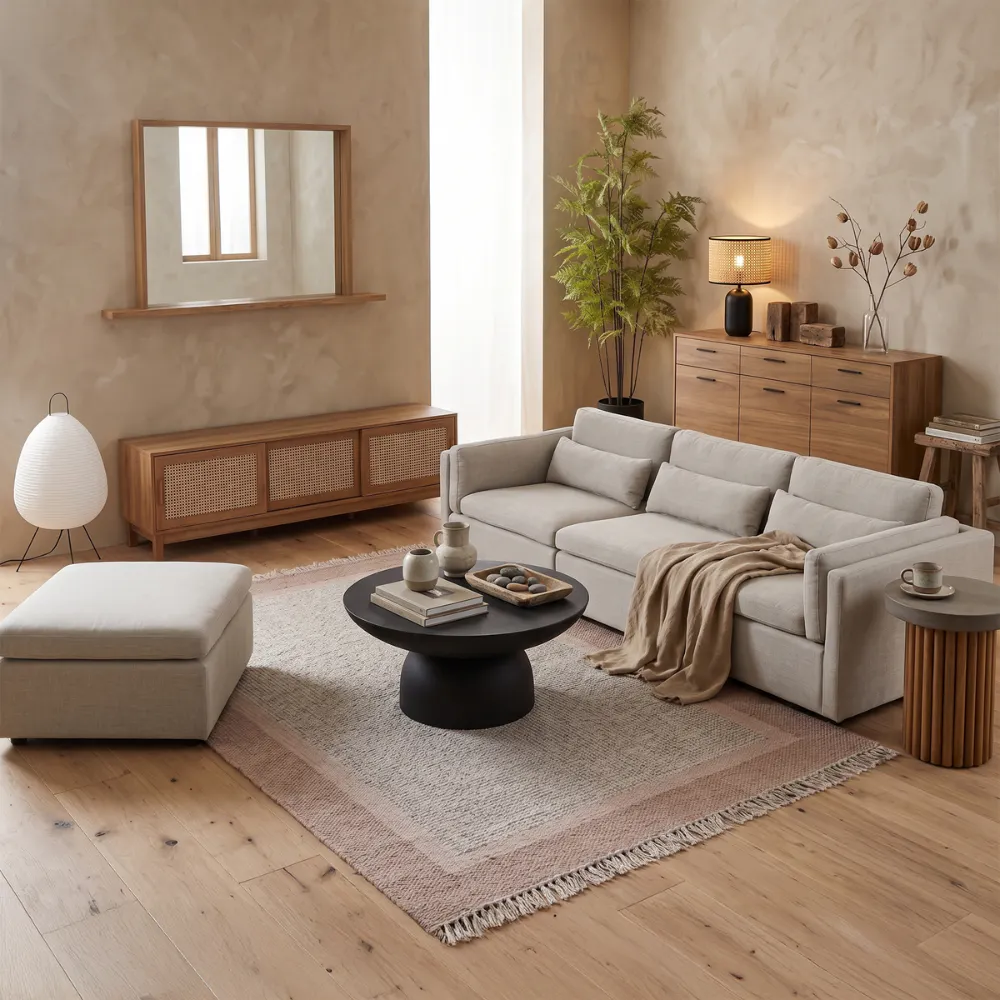
Japandi style blends Japanese restraint with Scandinavian warmth, producing a calm, low-slung, intentional look. It's the quietest of the three styles, and often where every piece has a purpose.
Japandi interior design is defined by:
- Low-profile furniture and simple, restrained silhouettes
- A muted earthy palette of warm beige, clay, charcoal and soft sage, with high contrast used sparingly
- Natural matte materials like oak, ash, linen, ceramic and paper
- Visible craftsmanship you can see up close
Essential Japandi Home Design Pieces:
- Low platform beds
- Low-slung sofas
- Simple bench seating
- Handmade ceramics
- Paper or linen lighting

Mid-Century Modern Interior Design
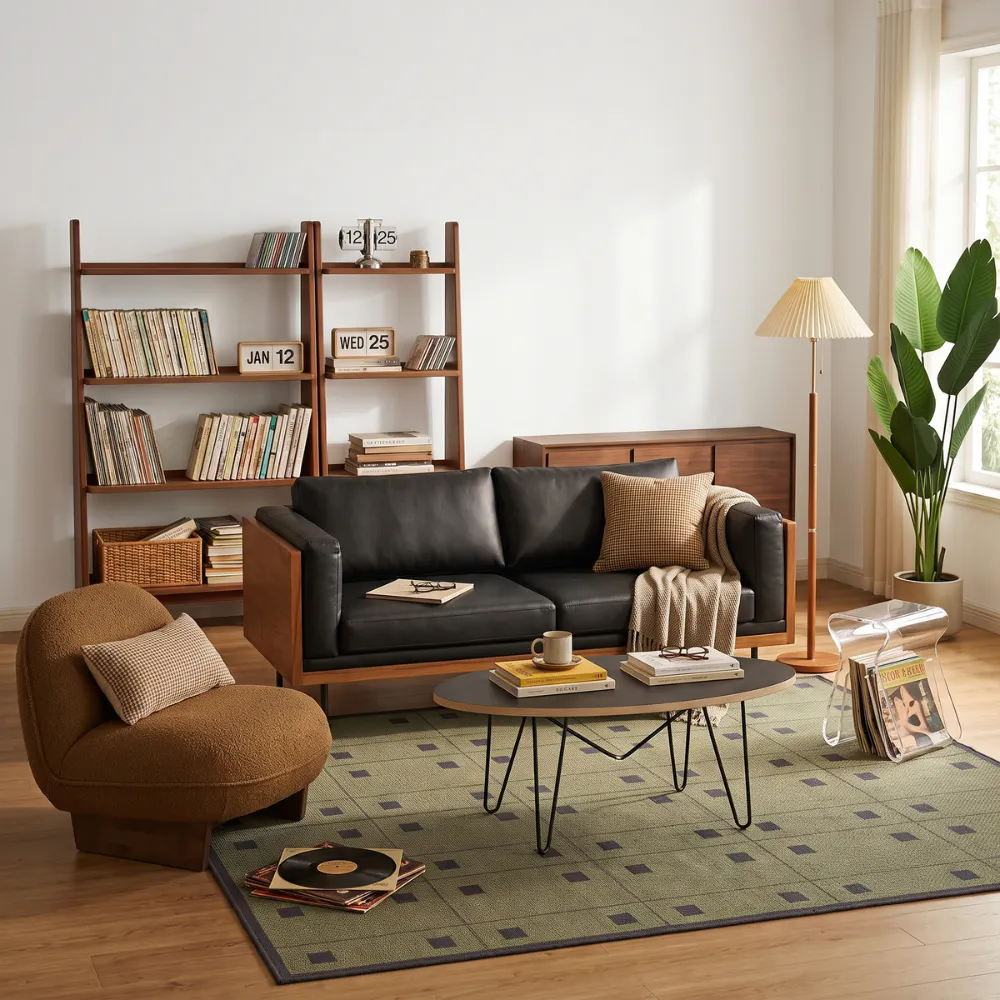
Mid-Century Modern style is the warmest and most characterful of the three, built around tapered wood, retro-confident silhouettes and richer wood tones. While all three styles share certain sensibilities like clean lines and natural materials, MCM has its own distinctive visual identity.
What defines Mid-Century Modern style:
- Tapered legs on sofas, chairs, sideboards and dining tables
- Organic curves on lounge chairs and sofas, alongside graphic angularity on shelving and lighting
- Walnut and teak tones as the signature woods
- Statement lounge chairs as the room's hero piece
- A palette anchored on warm woods, with mustard, olive, burnt orange or deep teal earning their place as accents
Signature Mid-Century Modern Home Design Pieces
- Walnut sideboards
- Tapered-leg sofas
- Iconic lounge chairs
- Sculptural pendant lighting
- Geometric rugs
Japandi vs Scandinavian vs Mid-Century Modern at a Glance
To make your choice easier, here's the full comparison on one screen.
| Japandi | Scandinavian | Mid-Century Modern | |
|---|---|---|---|
| Mood | Quiet, grounded | Bright, cosy | Warm, expressive |
| Palette | Warm earth tones | White and warm neutrals | Warm wood tones anchored with bold accents |
| Wood tones | Oak, ash, walnut | Pale oak, ash, birch | Walnut, teak |
| Silhouettes | Low, restrained | Soft curves, light frames | Tapered legs, sculptural |
| Materials | Linen, ceramic, paper | Light wood | Walnut, teak |
| Best for | Calm-seekers, who prefer uncluttered, low-maintenance spaces | Families and bright homes that feel lived-in and welcoming | Statement-makers who love decorating with character pieces |
| Maintenance | Moderate (requires tidying surfaces) | Low to moderate | Moderate (wood care) |
How to Make Each Style Work in Your Home
Any of the three styles can work in your Singapore home. What changes the feel of the room depends on which pieces you choose and how you style them.
Japandi in Any Home
In smaller flats, lean on a low-profile sofa and one or two natural-wood pieces to play to the style's restraint.
In larger homes, let the negative space do the work and avoid overfilling. The style relies on embracing openness, so a bigger room is an opportunity, not a problem to solve.
Scandinavian in Any Home
Compact flats benefit immediately from Scandinavian light woods and warm neutrals, since both open up the space in ways small rooms need.
Bigger homes ask for the opposite instinct. Layer throws and rugs deliberately so the warmth doesn't get lost across the wider footprint. The layering is what stops a large Scandinavian room from feeling empty.
Mid-Century Modern in Any Home
For smaller homes, one or two hero pieces (a tapered-leg sofa, a walnut sideboard) are usually enough to anchor the room while the rest stays quieter.
Larger homes give MCM room to stretch out, so build out the statement pieces and add accent furniture around them. The style's confidence works well when there's room to show it off.
One Note on Mixing: Each style borrows comfortably from the others. Japandi and Scandinavian exist on a spectrum, while Japandi and Mid-Century Modern share a lot of natural wood, clean lines and functional design principles. The key is keeping colour and wood tone coherent across the room, so the pieces feel like they belong together even if they come from different style families.
Which Style Suits Your Lifestyle and Personality?
Once you've thought about the room, the next question is what suits you. Three short reader profiles to help place yourself.
Choose Japandi if: you're drawn to calm and ritual, prefer fewer, better things, and don't mind keeping surfaces clear. Japandi rewards people who enjoy the act of curating their space rather than filling it.
Scandinavian is right for you if: you want a bright, family-friendly home that feels easy to live in day to day. It's the most flexible of the three when life is busy.
Go with Mid-Century Modern if: you love a piece with personality, enjoy decorating around hero items, and don't mind a bit of maintenance to keep the walnut and teak looking their best.
Most homes happily mix two of the three. Mixing all three at once takes a stronger eye for consistency, with colour palette, wood tones and proportions doing the heavy lifting to keep the room feeling coherent. If in doubt, pick a lead style and let the second one accent it.